01
The hair-growth cycle
Follicles cycle through anagen (growth), catagen (transition) and telogen (rest), followed by shedding. They do not all move through these stages together. The AAD describes shedding roughly 50–100 hairs a day as normal, but a daily count alone cannot diagnose a problem.
Shedding releases a whole hair from the follicle; breakage affects the shaft. Hair loss can involve reduced density, a changing part or hairline, or distinct patches. Scalp examination and a history of when changes began help distinguish them.
02
Different patterns, different causes
Telogen effluvium is increased shedding after more follicles enter the resting phase. It may follow fever, illness, surgery, childbirth, major stress, rapid weight loss or nutritional problems, often with a delay of several months. It is different from hereditary pattern hair loss, in which susceptible follicles progressively produce finer hairs.
Alopecia areata is an immune-mediated form of hair loss that often produces patches. Tight hairstyles can cause traction alopecia; prolonged traction can cause permanent damage. Chemical processing and heat can cause breakage. Pain, inflammation or scarring may point to conditions requiring prompt specialist assessment.
Treat the cause of hair loss—not every cause as the same.
03
Evidence and emerging ingredients
Evidence-based care is diagnosis-specific. A clinician may consider minoxidil for appropriate pattern hair loss, address a triggering illness or deficiency in shedding, or use different treatments for immune-mediated and scarring conditions. A cosmetic serum is not a substitute for this assessment.
A small randomized comparative trial investigated rosemary oil against 2% minoxidil in androgenetic alopecia over six months. Its size, comparator, duration and design limit interpretation; it does not establish that all rosemary preparations work, that rosemary extract is interchangeable with rosemary oil, or that the CUTIS serum has the same results.
Redensyl is an ingredient blend used in hair-care products. Ingredient-level and manufacturer-associated information should not be read as robust, independent proof for a finished formulation. No CUTIS serum clinical study report is available here.
04
Practical hair and scalp care
Use gentle cleansing suited to your scalp, condition the lengths and reduce repeated heat, bleaching and pulling. Avoid painful or tightly secured hairstyles. Persistent flaking or irritation may need a specific diagnosis rather than more oils or actives.
Aim for adequate protein and a varied diet. Do not start high-dose supplements or iron solely because hair is shedding; tests and supplementation should be guided by history and professional evaluation. Track changes with occasional comparable photographs rather than repeated daily counting.
05
Three common misconceptions
“More shedding always means permanent baldness.” Some shedding is temporary; other loss progresses. The pattern and cause matter.
“An oil or serum can treat every type of hair loss.” Immune-related, hereditary, traction and scarring conditions require different approaches.
“A study on an ingredient proves the product.” Extracts, doses, delivery systems and combinations differ, and a comparative trial is not a trial of CUTIS.
06
When to have hair loss assessed
Seek evaluation for sudden patchy loss, persistent or increasing shedding, scalp pain, burning, scaling, pustules, or areas that look smooth or scarred. Eyebrow or eyelash loss and associated symptoms are also worth discussing.
Earlier assessment is especially important for possible scarring hair loss or prolonged traction. A dermatologist may examine the scalp, review medicines and triggers, and choose targeted tests rather than a broad supplement regimen.
07 / Product perspective—not independent evidence
The CUTIS perspective
Hair Growth Serum contains Redensyl and Rosemary Extract, with CUTIS positioning around strengthening and scalp hydration. Product directions describe daily use for at least 24 weeks; this is not a guaranteed outcome or evidence that the serum treats androgenetic alopecia. BITOMIL is positioned as supportive nutrition, not treatment for an undiagnosed hair-loss condition.
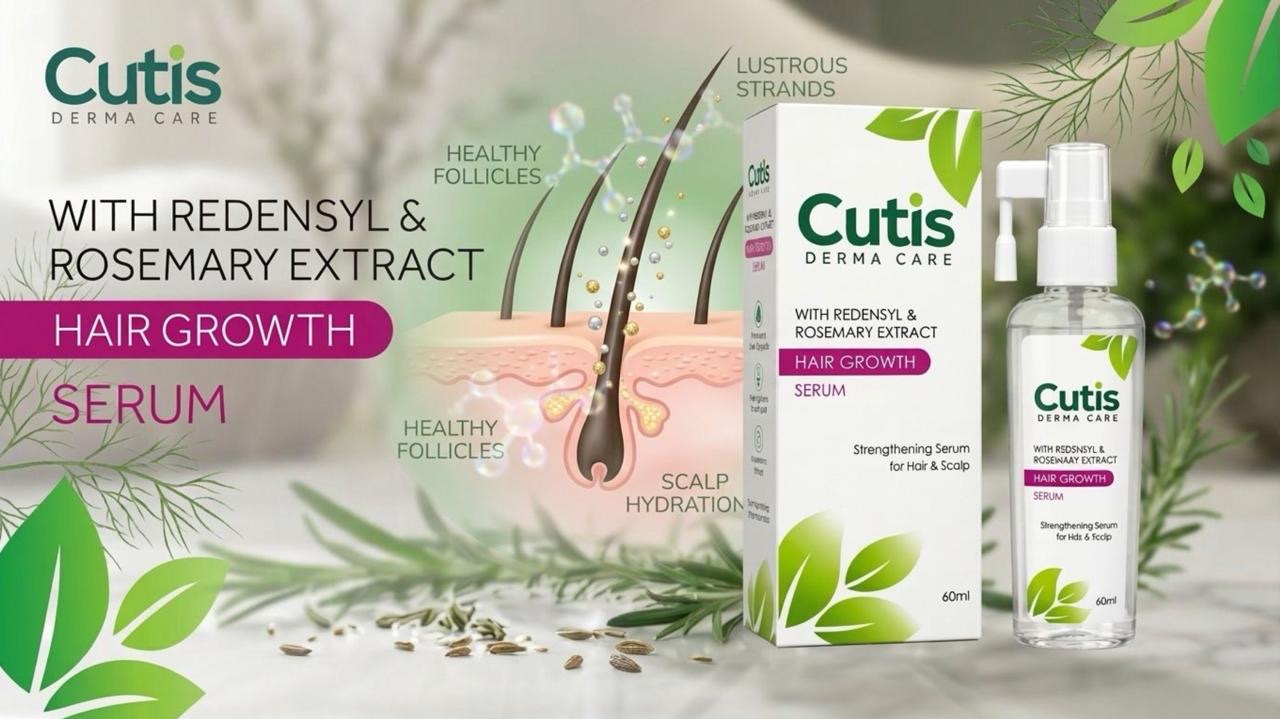
Hair Growth Serum
Product reference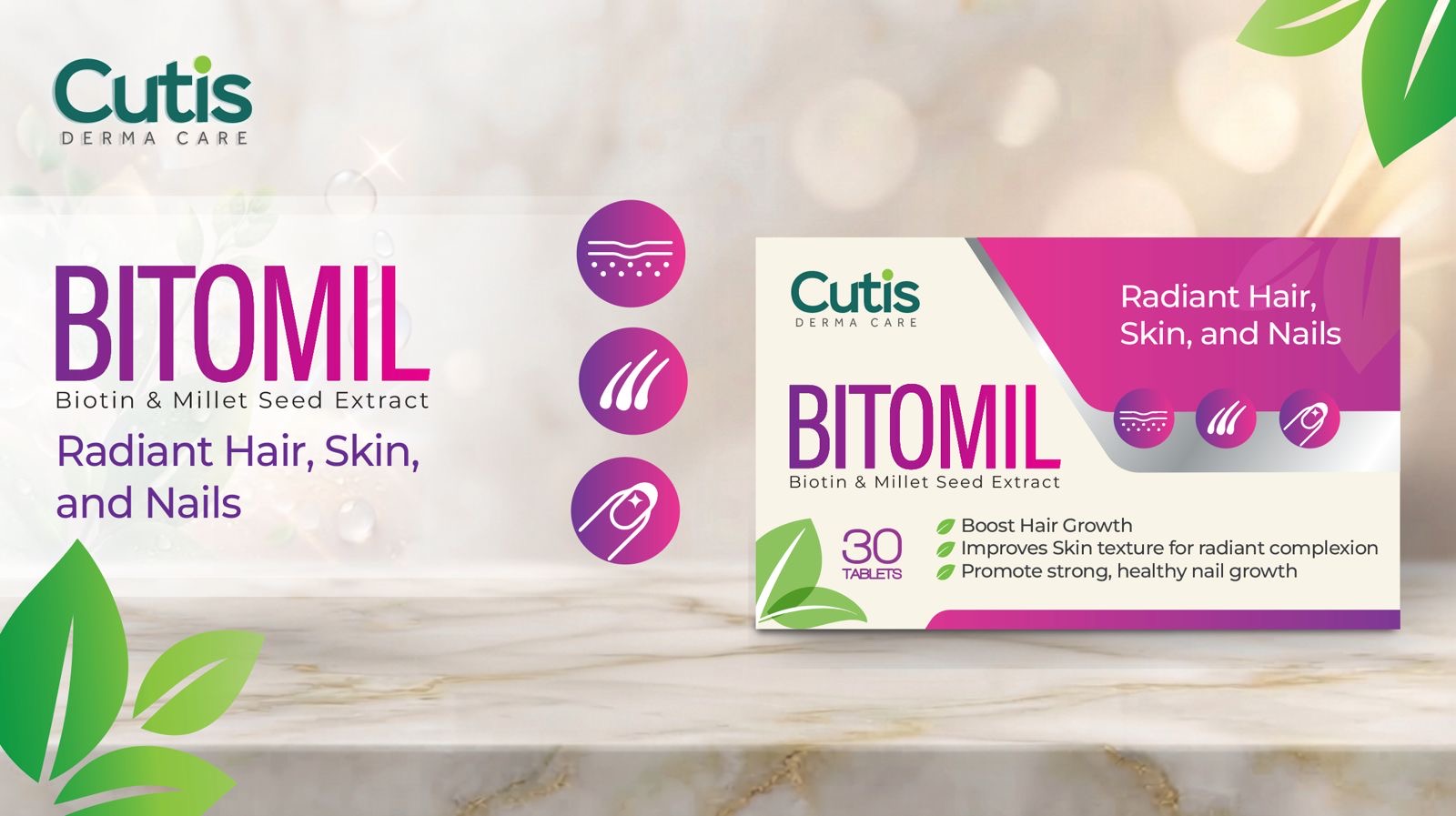
BITOMIL
Product reference08
Sources & further reading
Independent sources underpin the educational sections. CUTIS product statements are considered separately.
- 1.AAD — Hair shedding or hair loss?
- 2.AAD — Hair loss: Causes
- 3.DermNet — Telogen effluvium
- 4.DermNet — Alopecia areata
- 5.DermNet — Traction alopecia
- 6.International Journal of Trichology — Newer topical treatments: evidence review
- 7.Panahi et al. (2015) — Rosemary oil vs minoxidil 2%: randomized comparative trial
Educational information only. This page does not diagnose a condition or replace individualized medical care. Consult a qualified healthcare professional for assessment and treatment.
← All concerns