01
Keratin, nutrition and growth
Keratin is a structural protein central to hair and nails and part of the skin’s protective system. Amino acids from dietary protein provide building blocks; cysteine contributes sulfur-containing bonds that help stabilize keratin. Growth and renewal also depend on adequate energy and a range of nutrients.
Biotin (vitamin B7) supports enzymes involved in nutrient metabolism. Pantothenic acid (vitamin B5) is required to make coenzyme A, which participates in many metabolic reactions. Their normal biological roles do not prove that extra intake improves healthy hair or nails.
02
Look beyond the supplement shelf
Restrictive diets, insufficient energy or protein, malabsorption and certain medical conditions can create nutritional problems. Illness, medications, thyroid conditions, inflammation, genetics and physical damage can also affect hair and nails independently of diet.
Biotin deficiency is rare in people eating a varied diet. Brittle nails or shedding alone do not establish a biotin deficiency. A clinician may consider targeted testing based on symptoms and history; indiscriminate testing or supplementation is not the same as identifying a cause.
Correcting a deficiency and supplementing an already adequate diet are different questions.
03
What biotin evidence actually says
The NIH Office of Dietary Supplements states that most people obtain enough biotin and that there is little scientific evidence that supplements improve hair, skin or nails. Published reports of benefit often involve deficiency or particular underlying disorders; they do not establish a general benefit for otherwise healthy people.
Small uncontrolled studies of brittle nails and case reports should not be treated as proof for all users. Evidence about an individual nutrient or botanical cannot establish the efficacy of a multi-ingredient product. Vitamin B5 and amino acids have essential roles, but adding more is not automatically a way to improve appearance.
- — Address an identified nutritional need rather than guessing.
- — More biotin does not automatically mean more hair growth.
- — Ingredient biology is not the same as proven product outcomes.
04
A balanced foundation—and a laboratory safety note
Prioritize varied meals with adequate protein, sufficient energy and appropriate sources of vitamins and minerals. Protect nails from repeated wet work and trauma, and reduce damaging hair practices. Discuss persistent changes before assuming a supplement is the answer.
High-dose biotin can interfere with some laboratory assays, producing misleading results, including certain thyroid and cardiac troponin tests. Tell your clinician and the laboratory about all supplements before testing; they can advise on the particular assay and whether an interruption is needed. Do not use a generic stopping interval or delay urgent care.
05
Three common misconceptions
“Everyone with hair loss needs biotin.” Hair loss has many causes, and deficiency is uncommon.
“A water-soluble vitamin cannot cause a problem.” Even without classic toxicity, biotin can interfere with important blood tests.
“Hair, skin and nail supplements treat disease.” Nutritional support is not a substitute for evaluating alopecia, inflammatory skin disease, infection or nail disorders.
06
When changes deserve medical attention
Seek assessment for persistent or rapid shedding, patchy loss, nail separation, painful or inflamed nails, or skin changes with other symptoms. A new dark streak in a nail—especially if changing or extending onto surrounding skin—needs evaluation rather than a supplement.
A clinician can assess diet, medical conditions, medicines and the pattern of change, then decide whether testing, nutritional support or condition-specific treatment is appropriate.
07 / Product perspective—not independent evidence
The CUTIS perspective
BITOMIL contains biotin 2500 mcg per tablet, millet extract, L-cysteine and pantothenic acid. CUTIS positions it around hair, skin and nail wellness. That positioning is separate from the limited evidence for biotin supplementation without deficiency. Disclose BITOMIL to clinicians and laboratories before blood tests; supplements do not replace diagnosis or treatment.
GLU1C Tablets
Product reference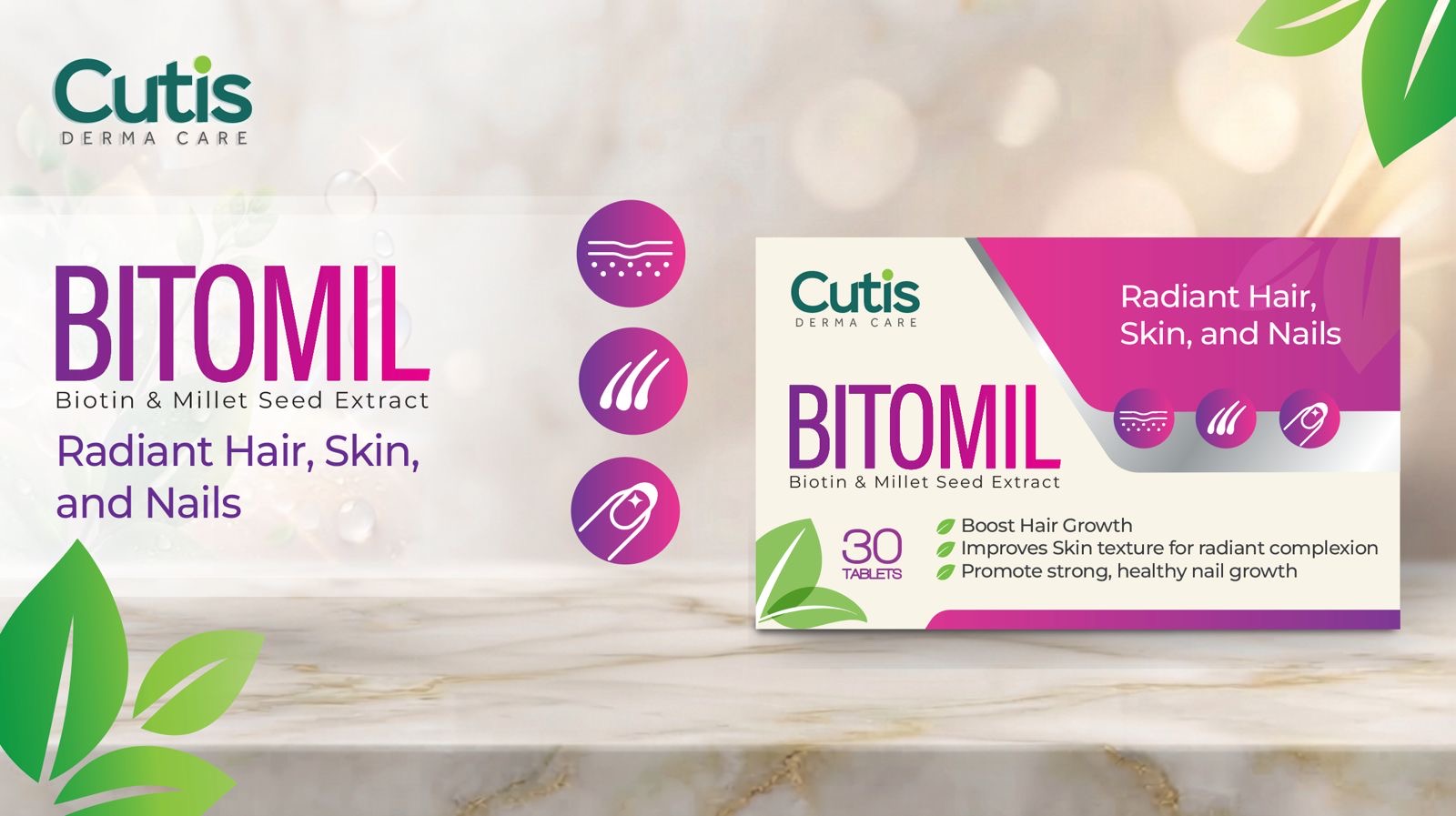
BITOMIL
Product reference08
Sources & further reading
Independent sources underpin the educational sections. CUTIS product statements are considered separately.
Educational information only. This page does not diagnose a condition or replace individualized medical care. Consult a qualified healthcare professional for assessment and treatment.
← All concerns