01
UVA, UVB and the meaning of SPF
UVA penetrates more deeply into skin and contributes to photoaging and pigmentation. UVB is a major cause of sunburn. Both contribute to skin damage and skin-cancer risk; neither is harmless. Some UVA passes through window glass.
SPF compares the UV exposure needed to cause sunburn on protected versus unprotected skin under standardized testing. It primarily describes UVB-related protection, not a duration of protection. Broad-spectrum protection addresses UVA as well as UVB; the SPF number alone cannot establish UVA performance.
02
Everyday exposure adds up
Time outdoors, UV intensity, season, altitude and reflective surfaces influence exposure. Clouds do not block all ultraviolet radiation. Short periods outdoors and exposure while travelling may contribute to cumulative damage.
More melanin provides some natural protection but does not eliminate sun damage or skin cancer. UV and, for some pigmentation conditions, visible light can worsen dark spots and melasma. Protection should be suited to exposure and the individual concern.
SPF describes protection under test conditions—not hours in the sun.
03
What reliable guidance recommends
AAD guidance recommends a broad-spectrum, water-resistant sunscreen with SPF 30 or higher when outdoors, alongside shade and protective clothing. Regular protection helps reduce sunburn and cumulative damage; sunscreen is one part of risk reduction, not a complete shield.
Water resistance is a separately tested label claim, not something that can be assumed from SPF or texture. Tinted sunscreen with iron oxides may be useful when visible light worsens pigmentation. This is general guidance, not a claim that the CUTIS sunscreen is water-resistant or contains iron oxides.
04
Apply enough. Reapply consistently.
Apply sunscreen before going outdoors—AAD guidance advises about 15 minutes beforehand—and cover all exposed skin, including ears, neck and the backs of hands. Most adults need about one ounce to cover exposed body skin, adjusted for the area exposed. Thin application reduces effective protection.
Reapply approximately every two hours outdoors and after swimming or sweating; follow the product’s water-resistance instructions where verified. Towelling can remove protection. Seek shade, wear a broad-brimmed hat, suitable clothing and sunglasses, and avoid relying on sunscreen to extend time in strong sun.
- — Choose broad-spectrum SPF 30+ for general outdoor protection.
- — Use enough and apply before exposure.
- — Reapply about every two hours outdoors and after swimming or sweating.
- — Add shade and clothing rather than relying on sunscreen alone.
05
Three common misconceptions
“SPF 60 means 60 hours of protection.” SPF is not a clock. Application, rubbing, sweat and exposure all affect protection.
“Darker skin does not need sunscreen.” All skin tones can be damaged, and pigmentation concerns may become more persistent with exposure.
“One application lasts all day.” No sunscreen remains perfectly intact through a day of outdoor activity. Reapplication and other protective habits matter.
06
When skin changes need assessment
Have a new, changing, bleeding or non-healing lesion assessed. A mole with asymmetry, an irregular border, uneven color or evolution deserves attention; concerning lesions can also be small.
Seek medical help for severe sunburn with extensive blistering, systemic symptoms or signs of dehydration. People with a history of skin cancer, photosensitivity or medicines that increase sun sensitivity should discuss individualized protection.
07 / Product perspective—not independent evidence
The CUTIS perspective
Broad Spectrum Sunblock SPF 60 is the CUTIS product name. CUTIS identifies titanium dioxide, zinc oxide and avobenzone, alongside aloe vera and alpha arbutin. The name alone is not independent verification of SPF or UVA test performance. CUTIS directions say 10–15 minutes before exposure and every 3–4 hours; general outdoor guidance above recommends reapplication about every two hours and after swimming or sweating. Water resistance is not claimed.
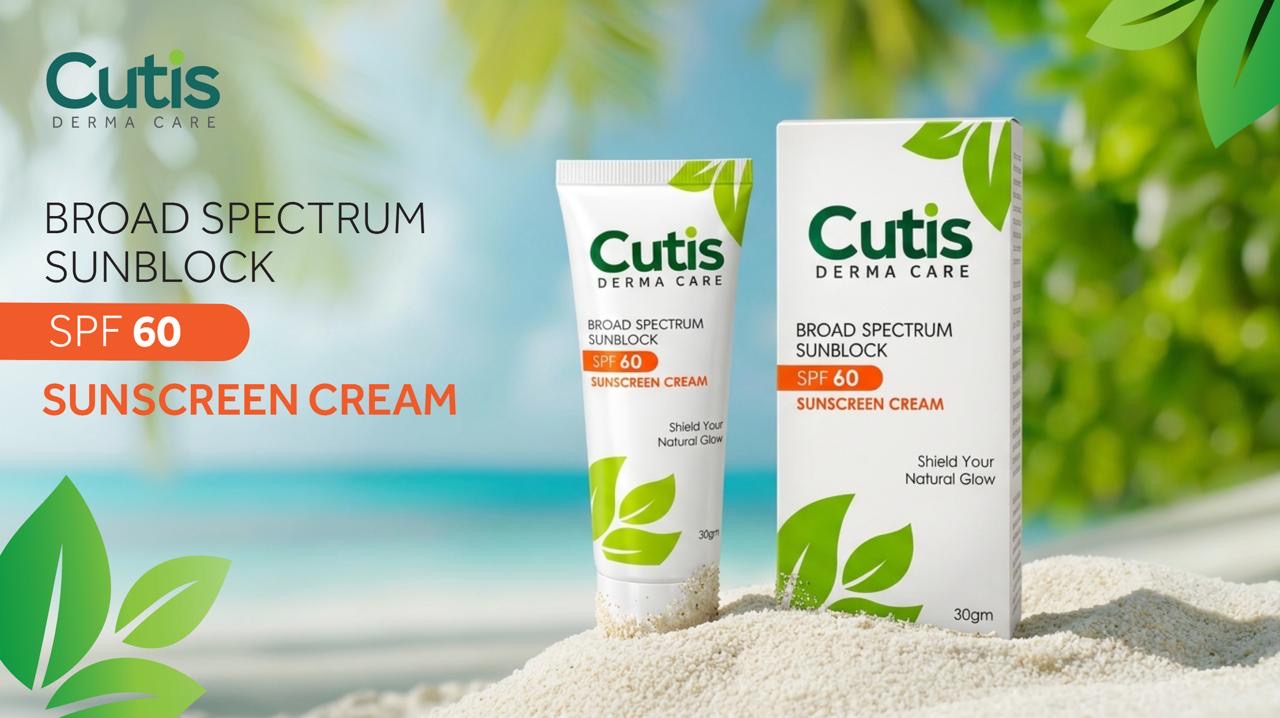
Broad Spectrum Sunblock SPF 60
Product reference08
Sources & further reading
Independent sources underpin the educational sections. CUTIS product statements are considered separately.
Educational information only. This page does not diagnose a condition or replace individualized medical care. Consult a qualified healthcare professional for assessment and treatment.
← All concerns